
How Sheep and Goats Shape the World Heritage Site
For over a thousand years, summer mountain farming (setring) and the annual livestock drive (buføring) have shaped life along the West Norwegian fjords. The reason lay in the unique topography: the steep cliff walls surrounding the fjords offered only tiny usable areas in the valley. To ensure survival through the harsh winter, valley grass had to be dried and stored as hay.
As soon as the spring snow melted, farmers drove their herds to the high-altitude summer pastures (setrar or fjellbeite). There, the animals grazed on nutritious mountain grass, while milk was processed directly into shelf-stable products on the summer farms.
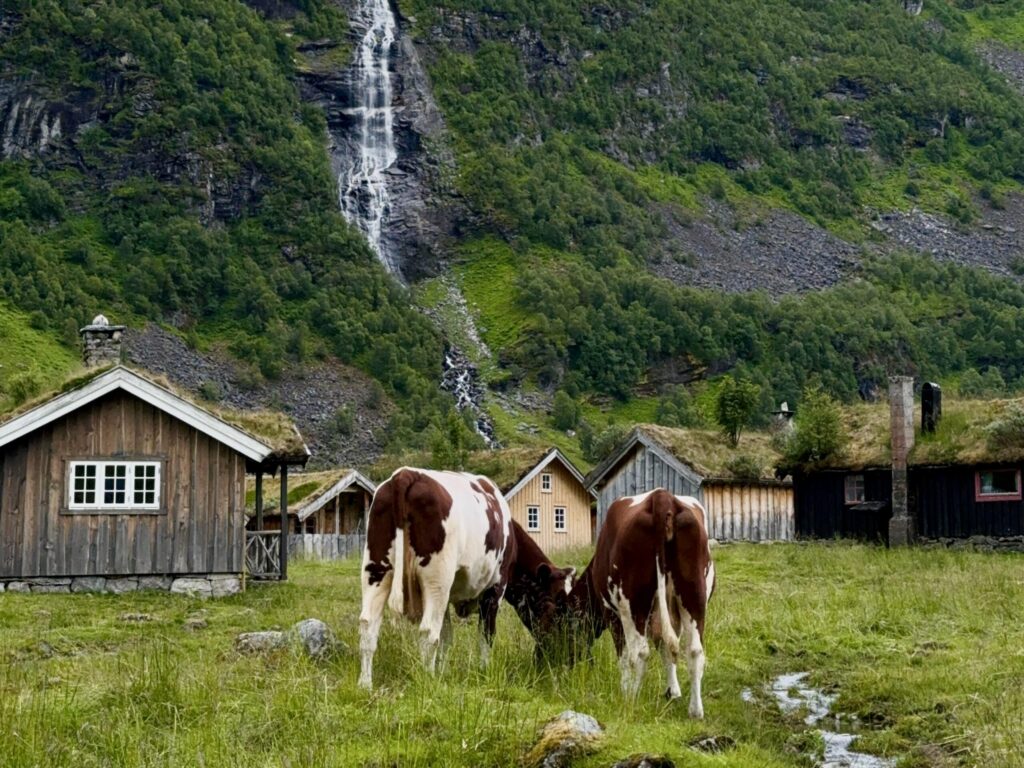
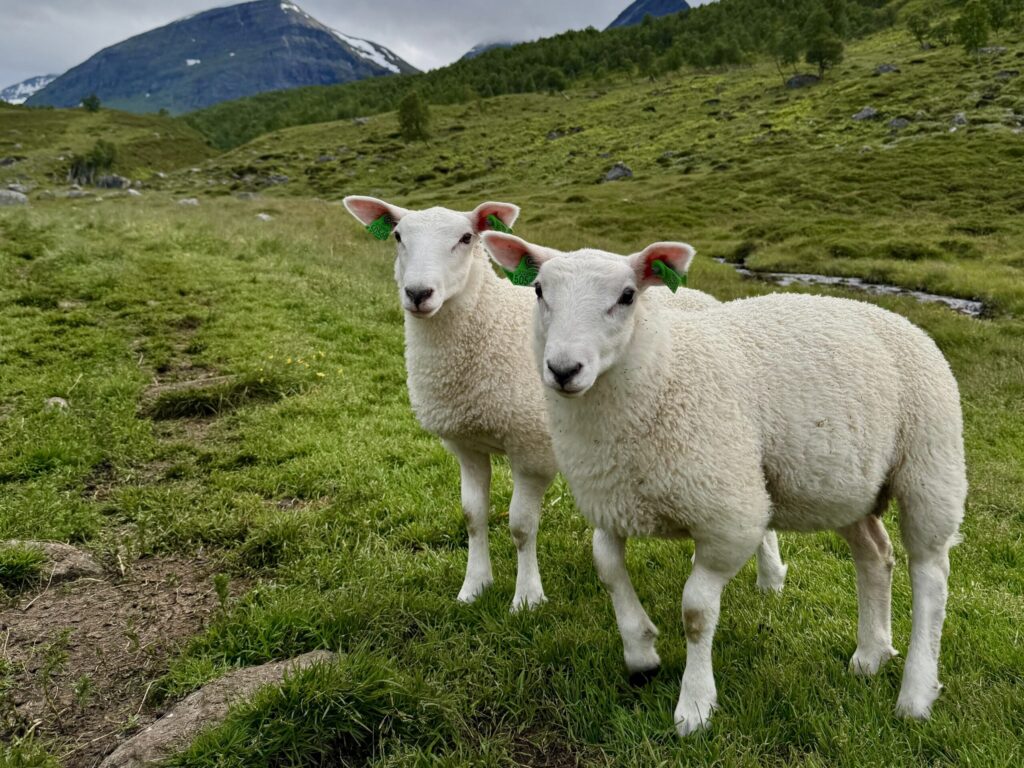
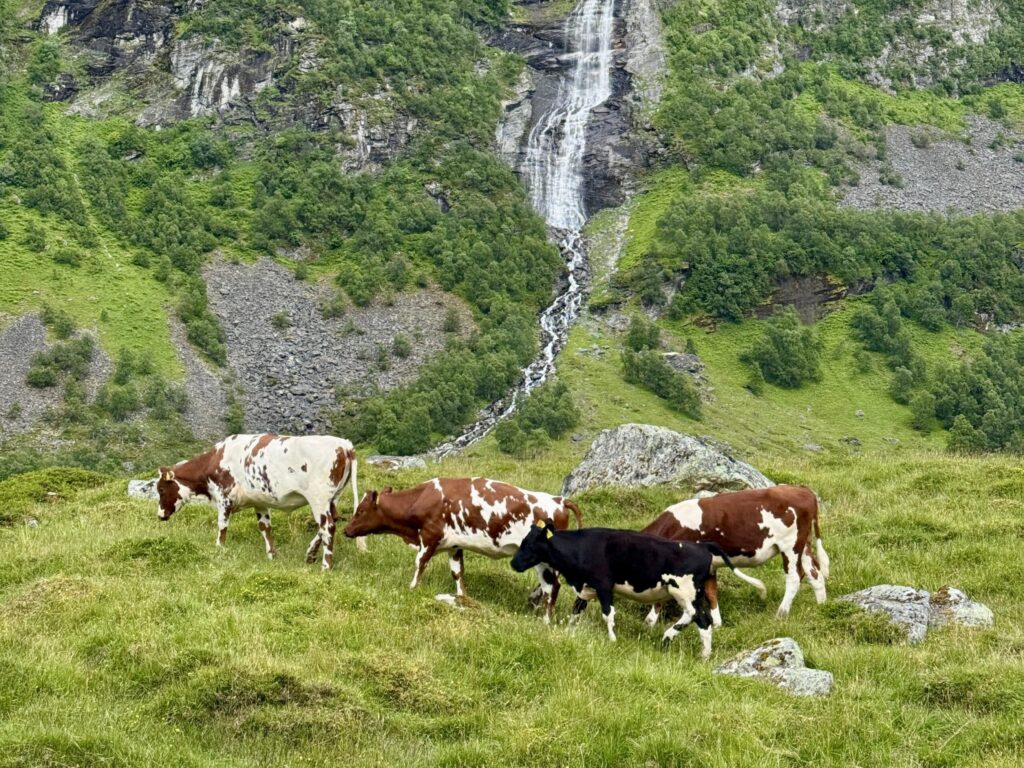
Animals grazing at Herdalssetra – the last active summer farm in the UNESCO World Heritage area West Norwegian Fjords. Photos: Ariadne Olsen
Insights into a living tradition
As the spring snow recedes, the traditional work of moving livestock begins for farming families along the Geirangerfjord. This short film highlights the close bond between people, animals, and the steep mountain terrain.
Join a local farming family in the short film “Spring Adventure: Moving Sheep to Mountain Pastures” by the Geirangerfjord World Heritage Foundation on their journey up to the high mountain pastures.
The Emergence of a Unique Cultural Landscape
Centuries of grazing fundamentally reshaped the mountains. Open, sunlit spaces emerged that today host a highly specialized ecosystem. Many rare species of plants, insects, and fungi adapted specifically to these light conditions. Grazing creates a mosaic of micro-habitats supporting a significantly higher biodiversity of wildflowers, butterflies, and wild bees than a dense, overgrown birch forest.
At the same time, this practice mitigates natural hazards: regularly grazed grass forms a dense root network that stabilizes the soil on steep mountain slopes and reduces erosion caused by heavy rainfall. If these areas remain ungrazed, tall dead grass rots under the snowpack in winter create a slippery layer that increases the risk of shallow landslides and snow avalanches.
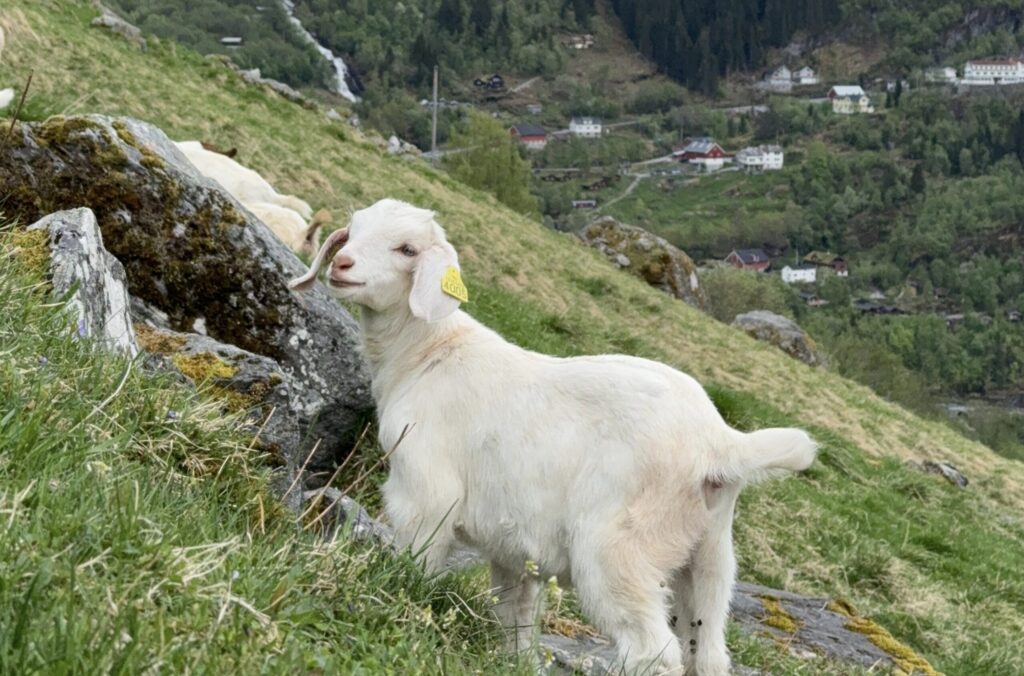
Young goat grazing at the steep slopes of Vestrås Farm above Geiranger. Photo: Ariadne Olsen
The Role of Grazing Amidst Climate Change
Today, driving livestock to summer pastures is often barely profitable for farms. Yet, grazing is more crucial than ever because climate change is rapidly altering the mountain environment. Rising temperatures prolong the growing season and cause the treeline to shift higher up the slopes. Without the continuous effort of the herds, alpine meadows and steep flanks would become overgrown with bushes and trees (attgroing) within a few decades. Sheep act as a natural buffer against this transformation. They not only preserve the ecosystem but also fulfill the mandate of UNESCO, which explicitly protected this fjord region as a synergy between nature and human land use:
Subsidies and Challenges: Grants and the Wolverine
To make this service to the cultural landscape financially feasible, the Norwegian government provides targeted support to farmers. Through the Regional Agricultural Environmental Program (Regionalt miljøprogram – RMP) and dedicated World Heritage funds (Verdsarvmidlar), farmers receive subsidies under specific conditions for grazing steep terrain and maintaining historical cultural landscapes.
However, in the Geirangerfjord area livestock owners face another major challenge: the wolverine (jerv). According to national predator monitoring (Rovdata), the mountain massif surrounding the Geirangerfjord and Reinheimen National Park features one of the highest wolverine population densities in Norway. During the summer, these predators regularly cause significant losses among free-ranging lambs, posing a heavy emotional and financial burden on farmers. Despite these hardships, local farmers hold fast to the tradition, securing a vital cultural element of the World Heritage site for the future.
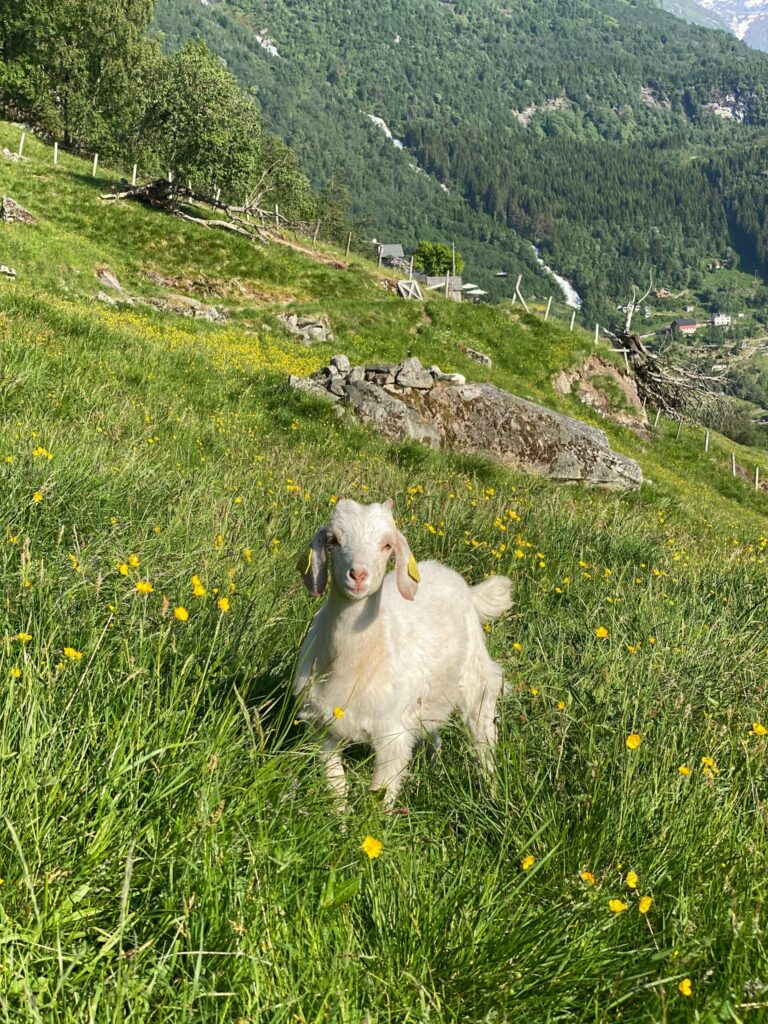
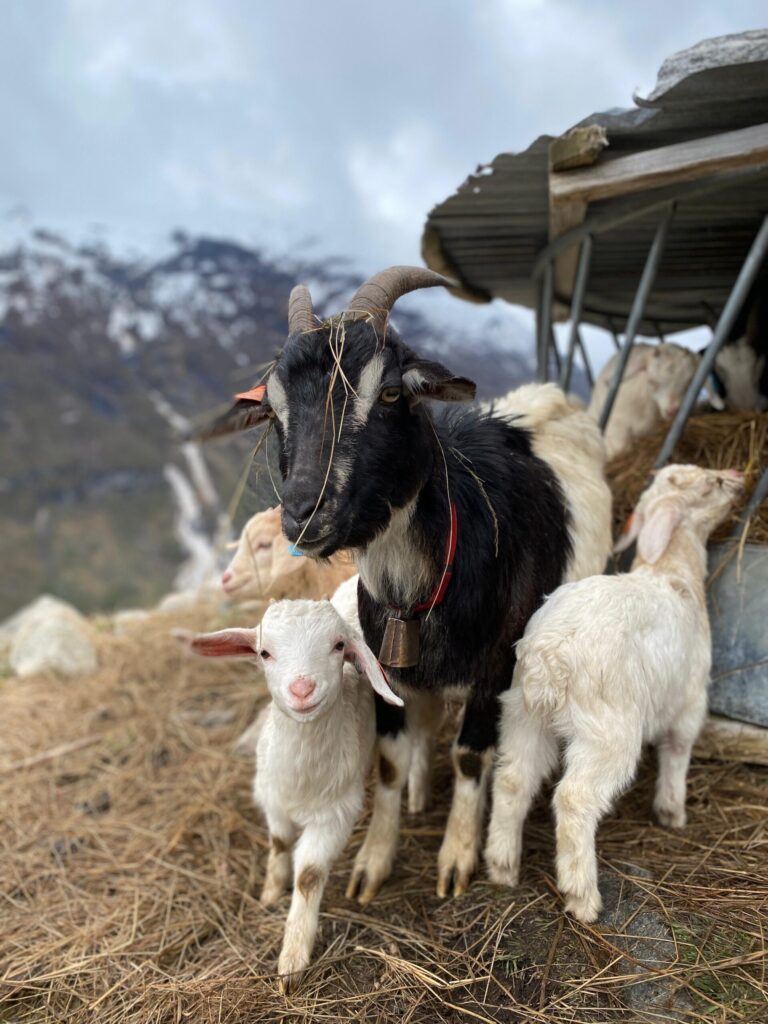
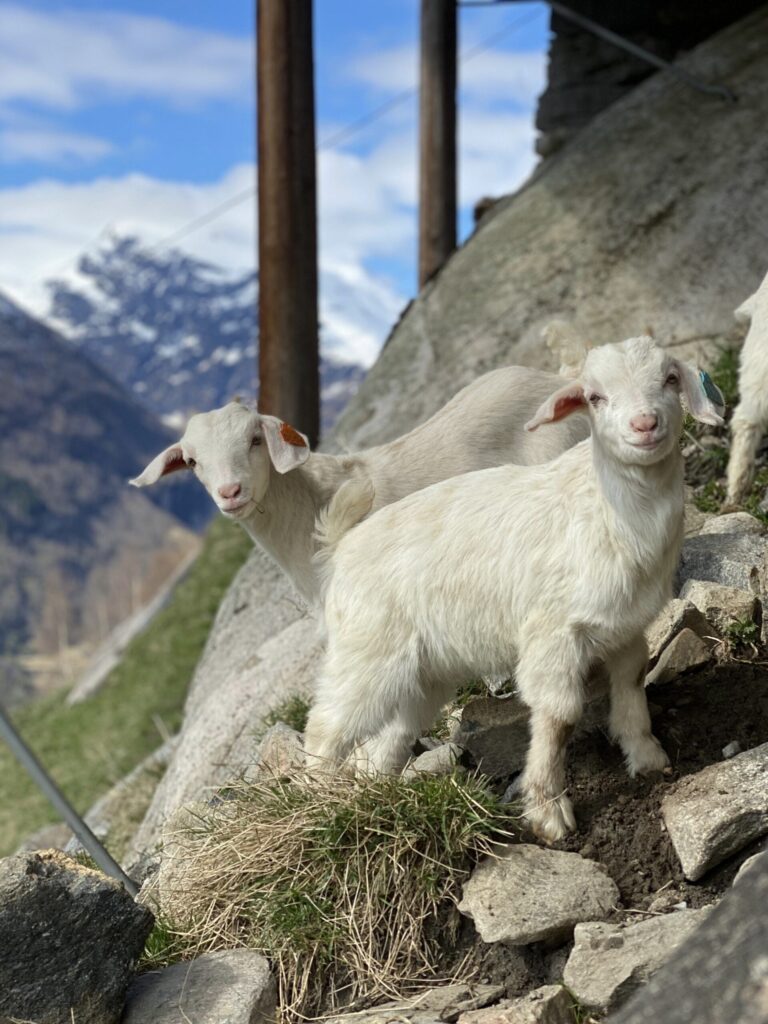
Young goats at Vesterås Farm, welcoming their very first spring above the Geirangerfjord. Photos: Ariadne Olsen
References
Austad, I., & Hauge, L. (2008): The «Fjordscape» of Inner Sogn, Western Norway. In: Jones, M., & Olwig, K. R. (Eds.): Nordic Landscapes: Region and Belonging on the Northern Edge of Europe. University of Minnesota Press, S. 202–228.
Stiftinga Geirangerfjorden Verdsarv (2025): Spring Adventure: Moving Sheep to Mountain Pastures. Short Film. (YouTube Video)
Hanssen-Bauer, I. et al. (2015): Klima i Norge 2100. NCCS Report No. 2/2015, Norwegian Climate Service Center / Miljødirektoratet. (Miljødirektoratet Publikasjoner)
Miljødirektoratet: Rovbase – Nasjonal database for rovviltbeobservasjonar og tap av beitedyr. (Rovbase.no)
Reinton, L. (1955–1962): Sæterbruket i Noreg (Band I–III). Instituttet for sammenlignende kulturforskning, Aschehoug. (Nasjonalbiblioteket Digital)
Rovdata / NINA: Bestandsstatus for jerv i Noreg. Nasjonalt overvåkingsprogram for rovvilt. (Rovdata.no)
Statsforvaltaren i Møre og Romsdal: Regionalt miljøprogram (RMP) for Møre og Romsdal. (Statsforvalteren.no)
Tasser, E., & Tappeiner, U. (2002): Impact of land-use changes on mountain vegetation. Applied Vegetation Science, 5(2), S. 173–184. (Wiley Online Library)
UNESCO World Heritage Centre (2005): West Norwegian Fjords – Geirangerfjord and Nærøyfjord. Nomination Dossier / IUCN Evaluation No. 1195. (UNESCO World Heritage Centre)
Written by Aaron Hager