
Habitats Under Pressure
Many high-mountain habitats depend on stable climatic conditions. As temperatures rise and snow conditions change, their species composition may gradually shift.
In a new report from Biofokus, snowbeds are highlighted as one of the habitats particularly at risk. Snowbeds are classified as Vulnerable (VU) on the Norwegian Red List of Ecosystems and Habitat Types, with climate change identified as the main threat.
Earlier snowmelt, shorter periods of snow cover and a gradual upward shift of the treeline may lead to changes in these habitats over time. At the same time, such changes can be difficult to detect without systematic monitoring.
An Eye on the Future
To document changes over time, 17 permanent monitoring plots were established across five locations in the Geirangerfjord and Nærøyfjord areas in the summer of 2025. At Jashaugen and Jondalsvatnet in the Nærøyfjord area, and at Dalsnibba, Tretindanibba and Oaldsvatnet in the Geirangerfjord area, permanent monitoring plots have now been established in some of the World Heritage Site’s most distinctive high-mountain environments.
Here, among snowfields, glacier forelands and high-altitude snowbeds, future surveys will reveal how climate change is affecting biodiversity over time.
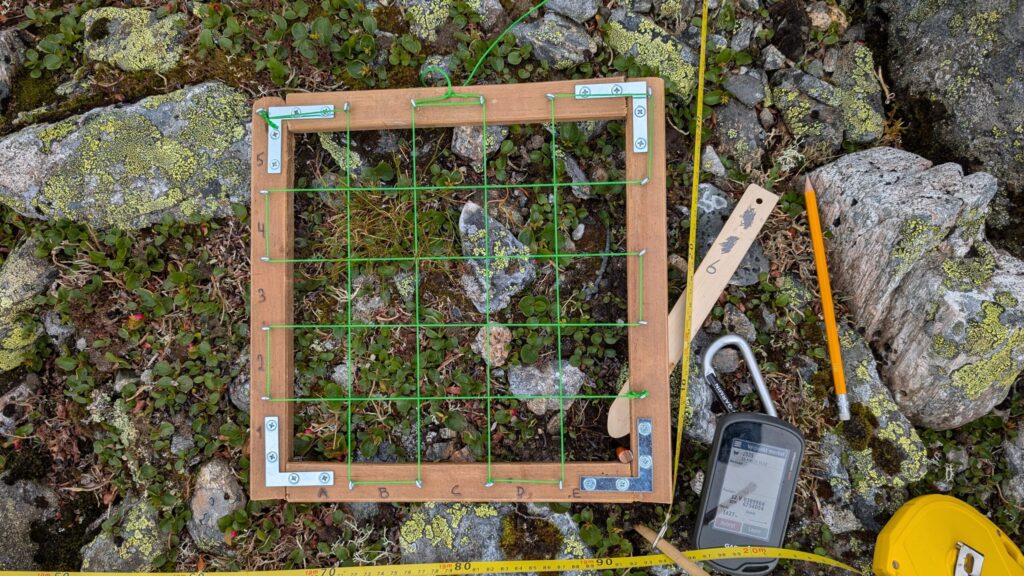
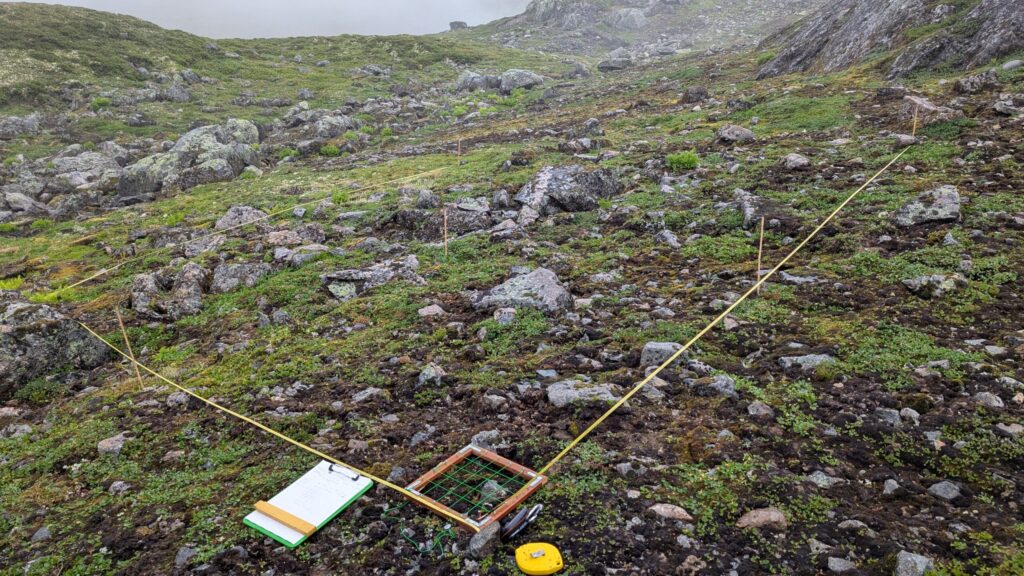
25 × 25 cm quadrat analysis (right). Monitoring plot between Fresvikvarden and Jashaugen in the Nærøyfjord area. All photos: Maria Hertzberg / Biofokus.
New Discoveries in the Mountains
The start of the monitoring programme has also provided new knowledge about biodiversity within the World Heritage Site.
During the fieldwork, 13 red-listed moss species previously unknown from the World Heritage Site were recorded. A range of common mosses and vascular plants were also documented.
The report points out that knowledge of the area’s mountain ecosystems has so far been limited, and that the survey has provided important new data. The authors also suggest that more species are likely to be present but have yet to be recorded.
The monitoring plots are permanently marked and georeferenced so that they can be surveyed again in the future. By recording vascular plants and mosses using standardised methods, researchers can compare results over time and track how mountain ecosystems are changing.
The monitoring therefore provides an important knowledge base for understanding the impacts of climate change in one of the world’s most distinctive fjord and mountain landscapes.
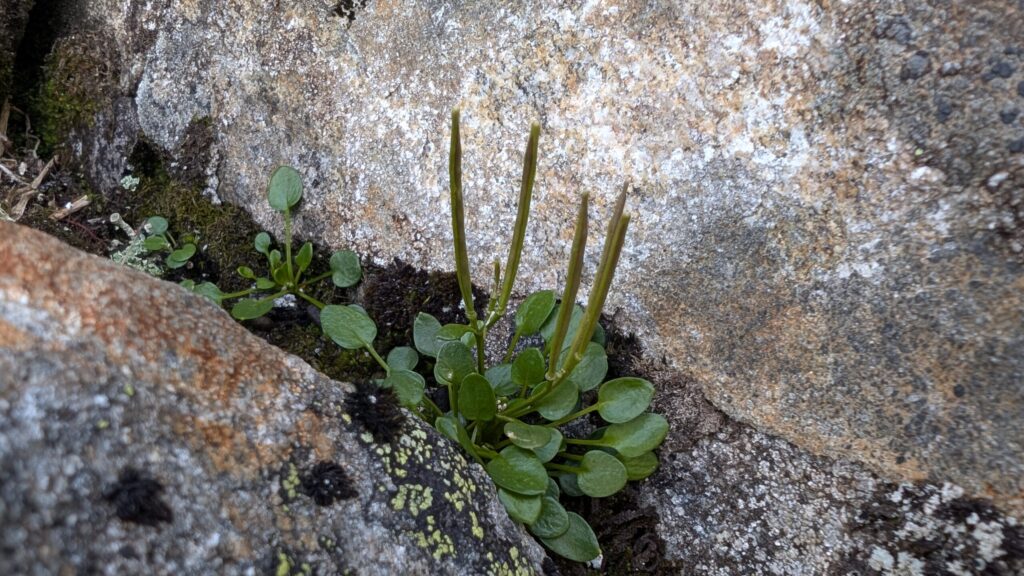
Alpine bittercress (Cardamine bellidifolia). Photo: Maria Hertzberg.
The World Heritage Site Extends All the Way to the Mountain Tops
The West Norwegian Fjords are perhaps best known for their steep mountain slopes, fjords and cultural landscapes. Yet the high mountains, snowbeds and areas surrounding the glaciers are important parts of the natural processes that have shaped this landscape over thousands of years. When these environments are affected by climate change, it is not only individual species that are at stake, but entire ecosystems that form part of the World Heritage Site.
This is why the small monitoring plots in the mountains are more than just research sites. They serve as warning signals, helping us understand how nature is changing – and providing those responsible for managing the World Heritage Site with the knowledge needed to monitor these changes in the years ahead.
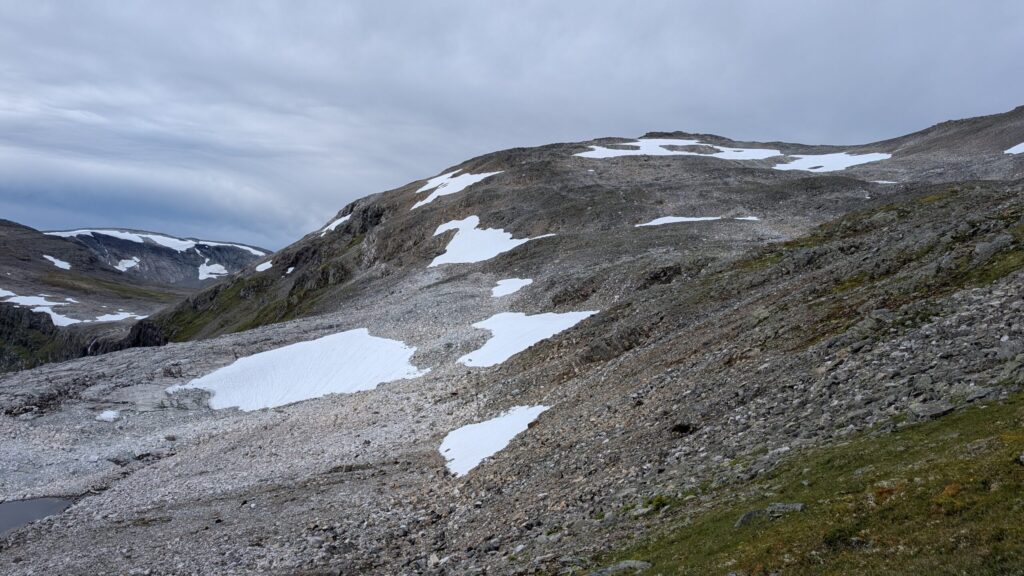
Det er berre ein liten rest att av snøfonnene oppe ved Rosshamrane i Jonadalen, Nærøyfjorden.
Broad Collaboration to Build Knowledge
Data collection and the monitoring programme have been carried out by ecologists Maria Hertzberg and Torbjørn Høitomt from Biofokus, commissioned by the protected area management authorities and the World Heritage organisations of the West Norwegian Fjords. The work forms part of the long-term effort to build knowledge about the ecological condition of the West Norwegian Fjords.
The aim is not only to document nature as it is today, but to establish a knowledge base that makes it possible to understand changes over time.
References
Hertzberg, M. og Høitomt, T. 2026. Kartlegging og overvaking av fjellvegetasjon i Verdsarvområdet Vestnorsk fjordlandskap. Biofokus rapport 2026-001. Stiftelsen Biofokus. Oslo
Written by Else Ragni Yttredal (aided by Chat GPT)